Commercial cleaning usually includes vacuuming and mopping floors, dusting and wiping desks and surfaces, cleaning and sanitising bathrooms, cleaning staff kitchens, emptying bins and wiping high-touch points such as door handles and light switches.
Window cleaning, carpet deep cleaning, hard floor care, washroom restocking and specialist cleaning can be added, depending on the scope agreed with the cleaner.
At Zenith Cleaning Service, we have provided commercial cleaning services across Adelaide for over 10 years, serving offices, medical centres, retail stores, warehouses, restaurants, gyms, schools and strata buildings.
This guide explains the routine tasks included in commercial cleaning, the periodic services available, how requirements vary by industry and which tasks are usually excluded.
What Is Commercial Cleaning?
Commercial cleaning is professional cleaning for business premises, such as offices, shops, clinics, warehouses, restaurants and the shared areas of strata buildings. It usually follows a regular schedule and a written scope that sets out the tasks, areas and cleaning frequency. Work often takes place outside business hours to minimise disruption.
It differs from home cleaning in several important ways. Commercial spaces often have more foot traffic, shared bathrooms and kitchens, larger floor areas and different equipment requirements. Cleaning providers must also consider relevant work health and safety duties, while industries such as food service and healthcare may have additional hygiene requirements.
You may also hear the term janitorial cleaning. It often refers to routine tasks that keep a facility clean and presentable, although the term can also describe an on-site cleaner who maintains a building during operating hours. Our janitorial services cover recurring cleaning requirements for commercial facilities.
Commercial Cleaning Checklist: What Is Usually Included?
The table below shows the tasks most commercial cleaning contracts cover on routine visits, along with the tasks that are usually done less often or priced separately.
| Area | Routine Tasks | Periodic or Extra Tasks |
|---|---|---|
| Floors | Vacuum carpets, sweep and mop hard floors | Carpet deep cleaning, hard floor stripping and sealing |
| Desks and furniture | Dust and wipe clear desks, counters, shelves and shared furniture | Detailed cleaning of high or hard-to-reach surfaces |
| Bathrooms | Clean and sanitise toilets, urinals and basins; wipe taps, mirrors and partitions; mop floors | Restocking toilet paper, hand towels and soap |
| Staff kitchens | Wipe benches, sinks, tables and the outside of appliances, then mop the floor | Cleaning inside fridges, ovens and microwaves |
| High-touch points | Wipe door handles, light switches, handrails, lift buttons and shared equipment | ATP surface testing in high-hygiene areas |
| Bins and waste | Empty general and recycling bins and replace liners | Clinical or hazardous waste, handled under separate rules |
| Glass | Spot-clean internal glass doors and partitions | Shopfront, external and high-reach windows |
| Entrances and shared areas | Clean reception, meeting rooms, corridors and lifts | High-pressure washing of entrances, car parks and loading areas |
Not every task in this table is part of every contract. At Zenith Cleaning Service, we confirm what is included during a free site walkthrough and put it in writing, so you know exactly what happens on each visit.
8 Things Routine Commercial Cleaning Covers
Routine cleaning keeps the spaces you use every day clean, hygienic and presentable between visits. Here is what that looks like, area by area.
1. Floors and Carpets
Floors take more wear than almost any other surface in a commercial building. Staff, visitors, deliveries and equipment all bring in dirt.
Routine floor care usually means vacuuming carpets in offices, walkways, reception areas and meeting rooms, and sweeping and mopping hard floors such as tiles, vinyl and polished concrete. The right method depends on the floor type and its finish.
Vacuuming removes loose dirt, but it cannot lift deep-down soil or stains. That is what periodic carpet cleaning is for. We cover it further below.
2. Desks, Workstations and Furniture
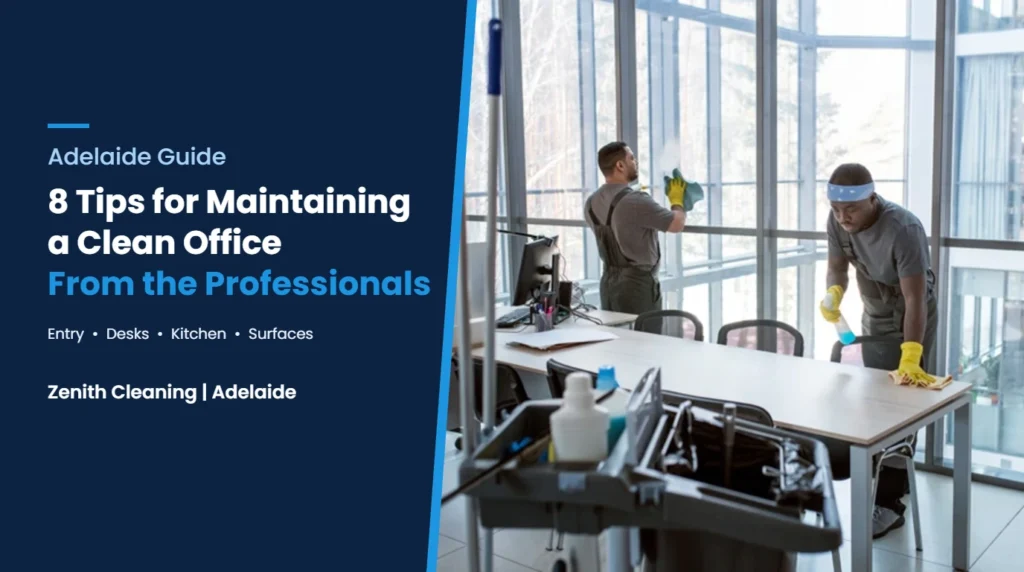
Desks, tables and shared furniture collect dust, crumbs and fingerprints every day. Routine office cleaning usually covers:
- Dusting and wiping clear desks, shelves and furniture
- Wiping meeting tables and reception counters
- Vacuuming around workstations
- Removing fingerprints from glass partitions
Desks often hold personal items, confidential papers and electronics, and good cleaners leave these exactly where they are. Our police-checked cleaners are trained to work around confidential material.
For a step-by-step look at an office clean, read how we professionally clean an office.
3. Bathrooms and Washrooms
Bathrooms need some of the most consistent attention in any workplace. Commercial bathroom cleaning usually includes:
- Cleaning and sanitising toilets and urinals
- Cleaning basins, taps and the surfaces around them
- Wiping mirrors and partitions
- Cleaning bathroom floors
- Emptying bins and replacing liners
- Wiping door handles and other high-touch points
Bathroom cloths and mops should never be used in kitchens or other areas, because that can spread germs. Our colour-coded microfibre system keeps them apart.
Does commercial cleaning include toilet paper and soap?
Not always; restocking is often a separate item, so check your quote. At Zenith Cleaning Service, we restock toilet paper, hand towels and soap for a small added fee.
4. Staff Kitchens and Break Rooms
Staff kitchens collect spills, crumbs and food waste throughout the day. A routine clean usually covers wiping benches and tables, cleaning sinks and taps, wiping the outside of appliances, emptying bins and mopping the floor. Cleaning inside fridges, ovens or microwaves is often a separate task, so it is worth confirming.
An office kitchenette is not the same as a commercial kitchen. Restaurants, cafés and caterers must also meet food safety laws, so they need a hospitality-specific scope, which we cover in the industry section below.
5. High-Touch Surfaces
Door handles, light switches, handrails, lift buttons, phones and EFTPOS terminals are touched many times a day, even when they look clean. Regular wiping of these points is a standard part of commercial cleaning, and busy sites may need it more often.
6. Bins and Waste
Almost every commercial cleaning contract includes emptying general and recycling bins and replacing liners. Waste is usually moved to the building’s collection point.
Some waste needs special handling:
- Clinical waste: Under South Australia’s Environment Protection (Waste to Resources) Policy, medical waste produced during a prescribed activity must be placed in a prescribed container and collected for disposal by an authorised licensed waste transporter or council, or transported directly by a person employed or engaged in the business producing the waste to a licensed facility or hospital. Clinical waste handling is part of our medical cleaning, covered below.
- Hazardous or regulated industrial waste: On industrial sites, we collect general and recyclable waste. Hazardous and regulated waste stays with your licensed waste contractor.
Agree on who handles each type of waste before cleaning starts, so nothing falls through the gaps.
7. Reception, Entrances and Shared Areas
Reception areas, entrances, corridors, meeting rooms and lifts shape a visitor’s first impression of your business. Routine cleaning usually covers the floors, counters, shared furniture and entrance glass in these areas.
8. Internal Glass
Glass doors and partitions show fingerprints and smudges quickly. Spot-cleaning internal glass is part of most routine cleans. Full window cleaning, especially external and high-reach glass, is usually scheduled separately.
Periodic and Specialist Services You Can Add
Routine cleaning keeps a site clean day to day. Periodic and specialist services deal with the build-up that routine cleaning cannot reach. These are usually scheduled less often and may be priced separately.
Carpet Deep Cleaning
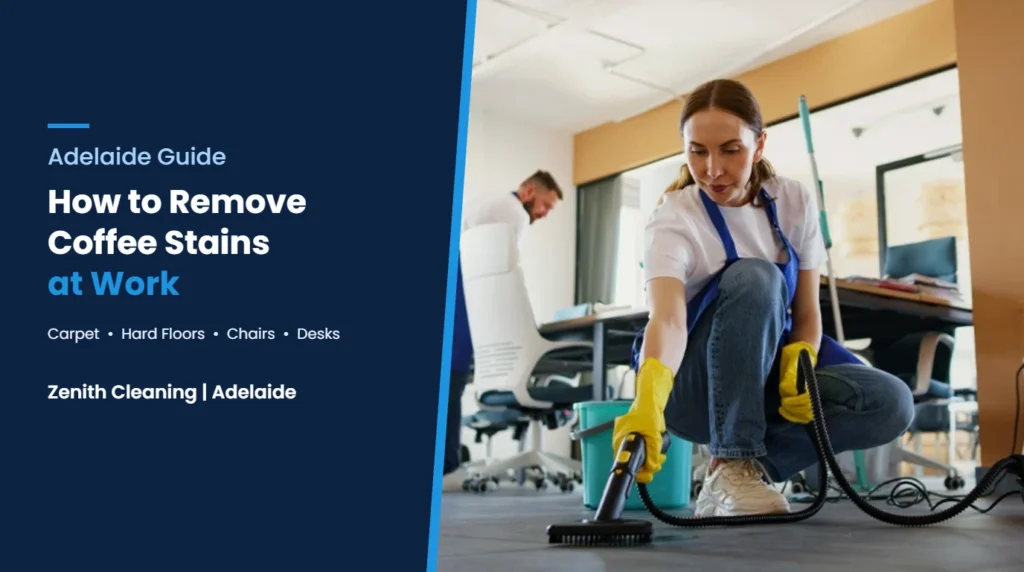
Carpets in busy areas hold dirt that vacuuming cannot remove. We offer periodic carpet deep cleaning, built into your maintenance schedule, with timing based on carpet type, foot traffic and condition. For retail spaces, this can also include steam cleaning of upholstery and fitting room chairs. For spills between visits, see our guide on how to remove coffee stains at work.
Hard Floor Stripping and Sealing
Vinyl and other coated hard floors lose their finish over time. Stripping removes the old, worn coating, and sealing adds a fresh protective layer. We offer a full strip and seal for vinyl floors as part of a planned floor care program, not as an everyday clean.
Window and Glass Cleaning
We offer streak-free window and glass cleaning, including high-reach commercial glazing. External and high-reach windows need extra equipment and safety planning, so they should be listed in your scope instead of being assumed.
High-Pressure Washing
High-pressure washing cleans hard outdoor surfaces such as entrances, driveways, bin areas, external walls, loading zones and warehouse floors.
High-Level Dusting
Dust settles on beams, pipework, ledges, racking tops and light fittings, especially in warehouses and factories. We clean these areas with reach equipment instead of ladders where site conditions allow. Because this work happens above people and equipment, we plan it around access and safety first.
Deep Cleaning
A deep clean tackles the build-up that routine cleaning misses, such as floor edges and corners, fixtures and fittings, high surfaces and heavily used areas. It is usually booked periodically, before an audit or at handover. Most of the industrial sites we work with pair a routine program with a deep clean during a shutdown or ahead of an audit.
When a lease ends, our end-of-lease cleaning handles the cleaning needed to hand the premises back in the condition your lease requires. Our 100% bond-back guarantee covers all cleaning items, but not repairs or other non-cleaning lease costs.
Facilities Maintenance Programs
Some sites need more than a regular clean. We offer tailored facilities maintenance programs that bring routine and periodic cleaning together on one planned schedule. Building repairs, plumbing and electrical work are trade jobs, so they are not part of a cleaning program unless they are agreed separately with qualified providers.
Routine, Deep and Specialist Cleaning: What Is the Difference?
| Service Type | What It Does | How Often |
|---|---|---|
| Routine cleaning | Keeps everyday areas clean and hygienic | Daily, a few times a week or weekly |
| Deep cleaning | Removes built-up dirt and grime that routine cleaning misses | Periodically, before an audit or at handover |
| Disinfection | Kills germs on surfaces in higher-risk areas | Based on the site’s hygiene needs |
| Specialist floor care | Restores or protects carpets and hard floors | Planned periodically |
| High-level cleaning | Cleans beams, racking and other overhead surfaces | Planned around access and safety |
A cleaning company may offer all of these services, but only the ones in your agreement are part of your visits.
How Commercial Cleaning Changes by Industry
Every type of business needs a different mix of cleaning tasks. Here is how the work usually changes.
Offices
Offices need routine care of desks, kitchens, bathrooms, meeting rooms and floors, usually after hours. Our office cleaning services come with a simple promise: if anything falls short of the agreed scope, we come back and fix it at no extra charge.
Retail Stores and Shopping Centres
Retail cleaning focuses on what customers see and touch: shopfronts, entrances, fitting rooms, display shelving, EFTPOS terminals and trolleys. Our retail cleaning services also cover quick response to spills during trading hours and the compliance paperwork many shopping centres ask tenants for.
Restaurants and Hospitality Venues
Venues need dining rooms, bars, bathrooms and kitchens cleaned before opening, after closing or between services. Depending on the agreed scope, cleaning may include removing food residue and grease from suitable surfaces, cleaning kitchen and dining-area floors, and wiping frequently touched surfaces. Our restaurant and hospitality cleaning can also include periodic dining room carpet cleaning and shopfront glass. Cleaning schedules must account for food preparation and service times, while specialist kitchen tasks should be agreed separately.
Medical Centres and Clinics
Healthcare cleaning is built around infection prevention and control. The National Safety and Quality Health Service (NSQHS) Standards set requirements for health service organisations to maintain a clean and hygienic environment. Our medical cleaning services use TGA-listed disinfectants, follow SA Health infection prevention guidelines and include clinical waste handling within the agreed scope. Cleaning procedures should reflect the facility’s requirements and support its infection prevention and control responsibilities.
Warehouses and Industrial Sites
Industrial cleaning covers large floor areas, aisles and racking bays, loading docks, oil and production residue, staff amenities and the outside of machinery. Depending on the site, work may also include dust removal from accessible overhead surfaces and cleaning around loading schedules to minimise disruption. Our industrial cleaning services cover machinery exteriors and guarding only, following your isolation and lockout procedures. We do not take apart or clean internal plant parts.
Schools, Gyms and Strata Buildings
- Schools: Our school cleaning is scheduled around timetables, exams and holidays. Every cleaner assigned to a school site holds a valid Working with Children Check.
- Gyms: Gym cleaning focuses on high-touch equipment, change rooms, showers and shared spaces, with early morning or late-night visits to avoid peak times.
- Strata buildings: Strata cleaning covers common areas such as lobbies, stairwells, lifts, car parks and shared facilities, with scheduling available seven days a week.
How Often Should Commercial Premises Be Cleaned?
There is no single schedule that suits every building. The right frequency depends on how many people use the space, how much foot traffic it gets and what work happens there. As a general guide:
| How Often | Example Tasks |
|---|---|
| Daily | Busy bathrooms, kitchens, bins, high-traffic floors and high-touch points |
| A few times a week | Offices, meeting rooms and shared areas in mid-sized workplaces |
| Weekly | Small, low-traffic offices and less-used areas |
| Monthly or periodically | Carpet deep cleaning, hard floor care and high-level dusting |
| As needed | Spills, one-off deep cleans and cleaning before an event, audit or handover |
Safe Work Australia’s model Code of Practice: Managing the work environment and facilities explains how employers should provide and maintain a safe work environment, including worker facilities such as toilets, washing areas and dining areas. Keeping them clean and well stocked is a practical part of maintaining those facilities.
For office-specific advice, see our guide on how often an office should be cleaned.
What Is Not Usually Included in Commercial Cleaning?
Some jobs fall outside a standard commercial cleaning contract because they require specialist equipment, qualified tradespeople or separate waste-handling arrangements. These may include:
- Building repairs, plumbing and electrical work
- Pest control
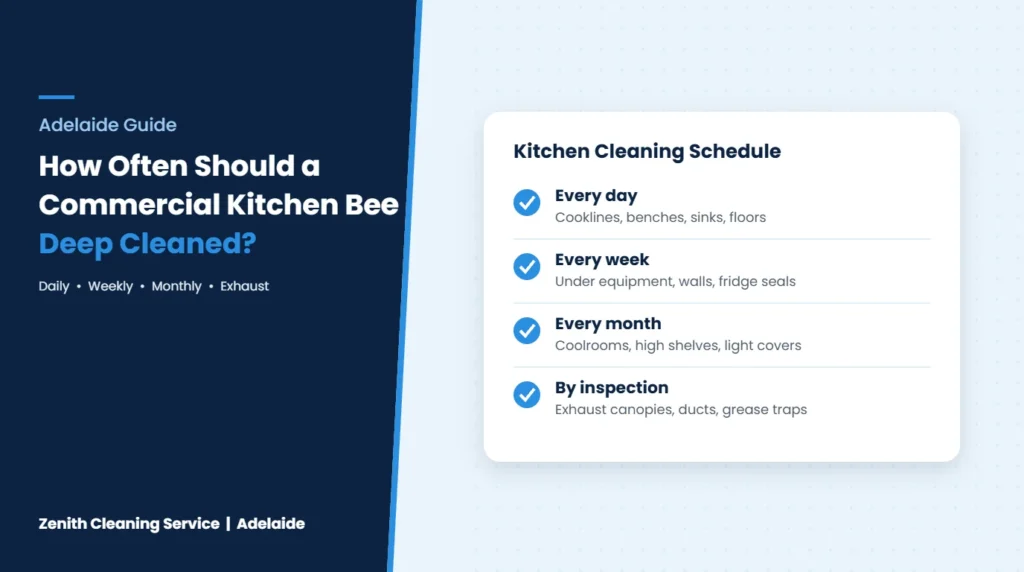
- Exhaust canopy cleaning and grease trap pump-outs
- Transport and disposal of hazardous or regulated waste
- Major restoration after fire, flooding or other serious damage
At Zenith Cleaning Service, we clarify exclusions in the written cleaning scope so clients know which tasks are included, which require separate arrangements and who is responsible for each job.
How Much Does Commercial Cleaning Cost in Adelaide?
The cost depends on what your site needs. The main factors are:
- Size of the site: More floor space and more rooms take more time.
- How often you need cleaning: Daily cleaning costs more each week than a weekly visit, but usually less per clean.
- Scope of work: A basic routine clean costs less than one that includes carpets, windows, floor care and restocking.
- Type of facility: Medical, food and industrial sites need specialist methods and equipment.
- Access and hours: After-hours, weekend or restricted-access sites can change how a job is planned.
We give every client a fixed quote after a site walkthrough, not a guess over the phone. We clean early in the morning, after hours, overnight or on weekends, with secure key and alarm lock-up arrangements.
Bottom Line
Commercial cleaning covers far more than vacuuming and emptying bins, and no two sites need the same mix of services. A good cleaning plan spells out which areas are cleaned, how often, which periodic services are included and what the price covers.
Whether you manage an office, shop, warehouse, clinic, venue or strata building, we can help you work out what your site needs. Call us on 0450 763 725 or get a free quote, and we will walk your site and put the full scope in writing.