Two offices on the same cleaning schedule can look completely different by the end of the week. As a commercial cleaning company based in Adelaide, Zenith Cleaning Service sees this pattern regularly across the sites we service.
The difference usually comes down to what happens between visits: daily staff habits and simple office routines.
A professional clean resets the space. Holding that reset comes down to a handful of habits that cost nothing and take seconds. Below are the ones that make the biggest difference, drawn from what we see working across the offices we look after.
1. Stop the Dirt at the Door
Most soil enters the building on shoes. Everything that happens inside is then dealing with what gets past the entrance.
- Use enough matting: A single small mat inside the door may not be enough. You want enough matting length for several footsteps, ideally split into two stages: a coarse mat outside or in the entry to knock off grit, and an absorbent mat inside to take up moisture.
- Clean the matting itself: A saturated mat becomes less effective. Once it is full of grit, it can carry abrasive particles further into the building and contribute to floor wear.
- Plan for Adelaide winters: Wet entries are both a soil problem and a genuine slip risk. SafeWork SA treats slips as a workplace hazard, including in offices, so keeping entry floors dry is important.
- Keep the outside clean too: Grit and leaves on the path outside can end up on your carpet and other floor surfaces.
Get the entrance right and you can reduce the amount of dirt and moisture brought inside, help protect floor surfaces and reduce slip risk.
2. Clear Desks Make Everything Else Possible
This is the tip cleaners wish more offices understood.
Cleaners are usually instructed not to move papers, files or personal equipment, for good reason. Nobody wants a contractor rearranging documents. But that means a desk covered in paper may not be fully wiped. Dust can remain in areas that are difficult to reach.
- Ask the team to clear desktops before leaving, not tidy them
- Keep cables managed so under-desk areas can actually be vacuumed
- Give people enough storage that clearing a desk is realistic rather than aspirational
- If you run hot desks, make clearing the desk part of leaving it, since nobody owns that space
A clear-desk habit makes more of the workspace accessible for routine cleaning and helps cleaners reach the surfaces and areas that need attention.
3. Fix the Kitchen and Half Your Problems Disappear
The office kitchen can generate a lot of complaints, and it responds well to three simple rules.
A weekly fridge clear-out: Set one fixed day each week. Anything unlabelled goes out that afternoon. Announce it once, apply it consistently, and the science experiments stop.
A sink rule: Nothing stays in the sink. Rinse it or run the dishwasher. A single cup left overnight can quickly become several by the end of the week, because leaving dishes can make it easier for others to do the same.
Bins in the right places and the right sizes: Many kitchen bin problems come down to capacity and collection frequency. If your bin overflows before the cleaner arrives, it may be too small or emptied too rarely. Adding another bin may be more practical than increasing the cleaning frequency.
Worth knowing: Bins themselves need washing, not just relining. Odours can come from residue inside the bin body, even after the rubbish has been removed. If your kitchen has an odour that survives the daily clean, the bin is one of the first places to check.
4. Washroom Habits That Cost Nothing
Washrooms need to be kept clean, safe and in good working order. The model Code of Practice on managing the work environment and facilities also covers the need to maintain workplace facilities and keep essential consumables available.
Two things help between cleans.
Do not let consumables run out: Keep a small backup stock on site and a named person who checks it. Running out of hand towels mid-week can quickly become an inconvenience for staff and visitors and affect the overall standard of the washroom.
Report faults the day you notice them: A slow drain, a running cistern or a loose dispenser. Small faults can become bigger maintenance problems when left unresolved. In a leased tenancy, report maintenance issues promptly and in writing so there is a clear record for the appropriate party to address.
5. Small Habits That Protect Expensive Surfaces
Your fitout is an asset. These habits help protect it, and they are the things professionals notice when they walk into a well-run office.
- Lift furniture, never drag it: Dragging chair and desk legs can damage carpet fibres and scratch or gouge hard flooring.
- Use chair mats on carpet: Replace them when they become damaged, since worn mats can reduce the protection they provide.
- Lids on coffee: Keep lids on between the kitchen and the desk to help prevent spills and coffee stains on office carpet.
- Saucers under every plant: Water marks on carpet and timber can be difficult to remove and may cause lasting damage.
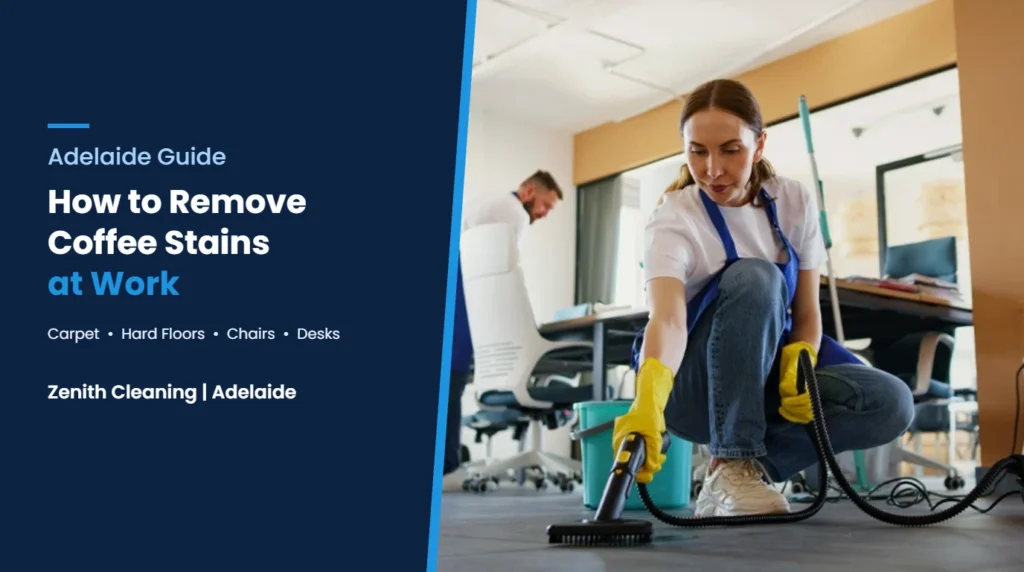
- Deal with spills immediately: Do not wait for the evening clean. Blot spills rather than rubbing them, and use a cleaning method suitable for the flooring and type of spill.
- Keep heavy items off unsupported joinery edges: Excessive weight can damage laminate and other surfaces.
None of these are cleaning tasks. They are simple habits that can help protect the condition of an office fitout over time.
6. Make It a System, Not a Nagging Email
Habits work better when responsibilities are clear. They stick when three things are in place.
A named owner per area: The kitchen, the storeroom, the meeting rooms. One person each, not “the team.”
A shared way to raise issues: Our sites use a digital logbook, so a fault or a missed area goes into a record rather than a corridor conversation. Anything raised gets a resolution plan within 24 hours. Even a simple shared note works if everyone uses it.
A five-minute end-of-day reset: Desks cleared, chairs in, meeting rooms reset, cups rinsed. A few minutes across a whole team can help a cleaner spend more time cleaning and less time tidying.
That last point is the honest core of this article. Time spent moving cups and stacking chairs is time not spent cleaning the surfaces that need attention.
7. What to Leave to Your Cleaner
Just as important as what your team does is what it should not attempt.
- Anything needing chemicals: Workplace cleaning products carry labelling and safe-use requirements, and mixing cleaning products can cause dangerous reactions. Our teams are trained in chemical handling and use products with documented safety data.
- Carpet stains that have set: Repeated home remedies on commercial carpet can cause further damage. Professional extraction can remove stains that routine blotting cannot.
- Hard floor care: Spot-cleaning sealed vinyl with the wrong product can dull the finish and may eventually require professional floor treatment.
- Washroom deep cleaning: Grout, fixtures and behind-pan areas require the right methods and equipment.
- Anything at height: Vents, light fittings and high glass can require appropriate equipment and safe working practices.
Where a site needs someone on hand through the day for spills and restocks rather than waiting for the evening, that is a scheduling question we solve with janitorial services rather than something to hand to your staff.
8. Match the Habits to Your Type of Site
The principles above hold everywhere, but the pressure points differ.
Client-facing offices should prioritise reception, meeting rooms and visitor washrooms, since these are among the most visible areas for visitors and staff.
Retail floors need particular attention to entrance matting and fitting room resets, especially where foot traffic is high.
Gyms and fitness spaces need wipe stations that members can easily use, ideally placed close to the equipment rather than away from the workout areas.
Medical and allied health sites should not rely on general staff habits for clinical areas, which require their own cleaning and infection prevention procedures under SA Health infection prevention guidance.
Strata and shared buildings need clear boundaries between tenancy areas and common areas, so shared spaces and maintenance responsibilities are not overlooked.
Why Adelaide Teams Work With Us
Good habits work best on top of a properly run schedule. Ours is built on:
- Same cleaners each visit: Directly employed, never subcontracted, so they know your site and notice when something changes
- Dedicated Area Supervisor: Will tell you where your office is losing ground, not just report that the clean was done
- Cleaner training: Chemical safety, equipment handling and fibre types, so the method suits the surface
- GECA-certified products: Green product options where sustainability sits in your procurement policy
- ISO 9001 processes: Scheduled and unannounced audits, plus ATP surface testing in high-hygiene areas
- Police checks and insurance: National police clearances, $20M public liability insurance and ReturnToWorkSA cover on every site
- Seven-day availability: So the schedule fits your operating hours rather than the other way round
Holding the Reset
Stop the soil at the door, keep desks clear, run the kitchen on three simple rules, protect your surfaces from avoidable damage, and give every area an owner. None of it takes long, but together these habits can help an office stay cleaner for longer between services.
If your office is following these habits and still slipping, the cleaning schedule may be the issue rather than the habits. We will walk your site and tell you honestly which one it is.
Request a free quote, contact our Adelaide team, or call us on 0450 763 725 to book a walkthrough. You can also see the full range of our commercial cleaning services across Greater Adelaide.
Frequently Asked Questions
What Is the Single Most Effective Way to Keep an Office Cleaner?
Better entrance matting can help reduce the amount of dirt and moisture brought into an office. It also helps protect floors and manage slip risk.
Should Staff Be Responsible for Cleaning the Office?
Staff can handle simple habits such as clearing desks, rinsing cups, resetting meeting rooms and dealing with spills promptly. Cleaning tasks involving chemicals, floors, washrooms or working at height are better left to trained cleaning professionals.
How Do We Stop the Office Kitchen Becoming a Problem?
Three simple rules help: set a weekly fridge clear-out day, keep dishes out of the sink, and use bins that match the amount of waste produced. If an odour remains after cleaning, check the inside of the bin as well as the rubbish.
Why Does the Office Still Feel Dusty After Cleaning?
Dust can settle on vents, light fittings, cupboard tops and high ledges and then fall back onto lower surfaces. Regular high dusting can help keep these areas under control, provided the surfaces can be safely reached.
How Often Should We Review Our Cleaning Arrangement?
Review it when your headcount, layout or operating hours change, and periodically even when nothing has changed. Office use can change over time, so the cleaning scope and frequency may need to change with it.
We Are Keeping on Top of It and the Office Still Looks Tired. What Now?
It may be time to look beyond daily cleaning and consider periodic floor or carpet care. Professional carpet extraction and specialist hard-floor treatments can help restore surfaces when routine cleaning is no longer enough.